
Beginning Preparation Without Understanding the Syllabus
One of the most common mistakes is starting preparation without carefully reading the syllabus and exam pattern of the target state judiciary examination. Every state has a different structure, different local laws, different language requirements, and different weightage for subjects. Many aspirants begin studying random subjects or follow coaching material blindly without first understanding what the exam actually demands. This results in unnecessary stress and wasted effort.
Aspirants spend months reading topics that carry little relevance while ignoring high-scoring areas repeatedly asked in previous years. A proper understanding of the syllabus helps in prioritising subjects, planning revision cycles, and managing time efficiently. Successful preparation always starts with clarity regarding prelims, mains, and interview expectations.
Referring to Too Many Books and Sources
In the age of online education, aspirants are flooded with PDFs, YouTube lectures, handwritten notes, coaching modules, and endless recommendations. First-time candidates believe that more material means better preparation. In reality, excessive resources create confusion and weaken conceptual clarity.
Many aspirants keep changing books midway because they feel someone else is studying from a “better” source. As a result, no single subject is revised properly. Judiciary preparation rewards repetition and revision far more than accumulation of material. Reading one reliable source multiple times is generally more effective than collecting ten different books for the same topic.
Ignoring Bare Acts
A major error among beginners is focusing heavily on coaching notes and guidebooks while neglecting Bare Acts. The judiciary examination is deeply rooted in statutory language. Objective questions, mains answers, and even interview discussions revolve around precise wording and interpretation of provisions.
Many first-time aspirants read summaries of sections but never develop the habit of reading the actual legislation. This weakens their ability to identify keywords, exceptions and provisos. Bare Acts are not supplementary material; they are the foundation of judiciary preparation. Aspirants who avoid them usually struggle in both prelims and mains.
Delaying Answer Writing Practice
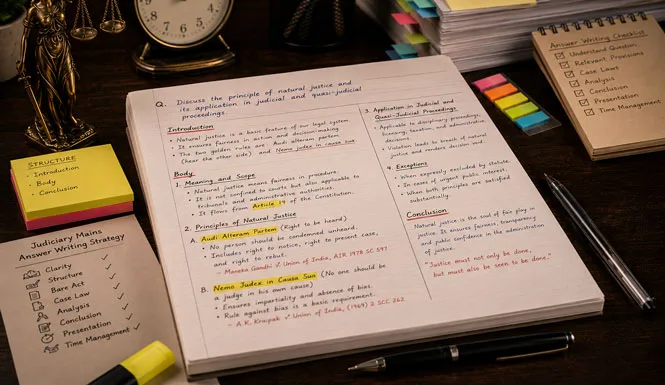
Another serious mistake is postponing answer writing until “the syllabus is complete.” Most aspirants believe they will start mains practice later, but later rarely comes. Judiciary mains examinations demand structured presentation, clarity of legal reasoning, and speed under pressure. These skills develop only through regular practice.
Many candidates possess adequate legal knowledge but fail to convert that knowledge into effective written answers. They either write excessively long answers without structure or produce vague and underdeveloped responses. The inability to present legal provisions, case laws, and analysis coherently becomes the reason for failure despite good preparation.
Neglecting Previous Year Papers
First-attempt aspirants underestimate the importance of previous year papers. Instead of analysing trends, recurring topics, and question patterns, they spend most of their time consuming new study material. Previous papers reveal the examiner’s mindset, the depth of questions, and the practical approach required in answers.
Ignoring these papers leads to directionless preparation. Aspirants study highly technical or irrelevant topics while repeatedly asked concepts remain untouched. Solving previous papers also improves confidence and helps in identifying weak areas much earlier in the preparation cycle.
Depending Entirely on Coaching Institutes
Coaching can provide direction, discipline, and guidance, but many first-time aspirants become excessively dependent on it. They assume attending lectures alone is enough to clear the examination. Judiciary preparation ultimately remains a self-driven process.
Candidates who rely entirely on coaching fail to develop independent analytical ability. The examination rewards conceptual understanding and interpretation, not passive memorisation. Coaching can assist preparation, but it cannot replace self-study, revision, and personal discipline.
Studying Without a Long-Term Strategy
Many aspirants prepare intensely for a few weeks and then lose consistency. Some study for excessively long hours initially, leading to burnout within months. Others constantly switch schedules and strategies after watching topper interviews or online advice.
Judiciary preparation is a marathon, not a sprint. Consistency matters more than temporary motivation. A realistic timetable, proper sleep, regular revision, and manageable daily goals usually produce better outcomes than unsustainable study routines.
Ignoring Mental Health and Emotional Stability
The pressure of judiciary preparation can become overwhelming, especially after a first unsuccessful attempt. Many aspirants isolate themselves socially, compare their progress constantly with others, and tie their self-worth entirely to exam performance. This emotional exhaustion eventually affects concentration and confidence.
The competitive nature of judiciary examinations has become even more demanding with recent developments such as the Supreme Court’s decision requiring three years of legal practice for future judicial service aspirants, increasing uncertainty and pressure among candidates.
Maintaining emotional balance, taking short breaks, exercising, and sustaining a healthy routine are not distractions from preparation; they are essential for surviving the long preparation cycle with clarity and focus.
Conclusion
The first attempt at the judiciary examination often teaches lessons that no coaching institute or book can fully provide. Most mistakes made by aspirants are not related to intelligence but to planning, discipline, and execution. Overloading resources, neglecting Bare Acts, avoiding answer writing, ignoring revision, and studying without direction are mistakes that repeatedly affect preparation.
Judiciary preparation rewards consistency, clarity, and patience. Aspirants who simplify their strategy, trust limited resources, revise repeatedly, and maintain emotional balance gradually develop the maturity required for success. The examination is not merely testing how much law a candidate knows; it is testing whether the candidate can think, analyse, and remain composed like a future judicial officer.
Other Blog Posts