
Master Commercial Arbitration with Practical Case-Building Skills
A Comprehensive Commercial Arbitration Course Sr. Adv. Percival BillimoriaUnderstand how arbitration actually works. From drafting agreements to arguing and enforcing awards, with insights drawn from real disputes and practice.
• Learn how to build and present arbitration cases • Understand the full lifecycle of arbitration proceedings • Develop practical advocacy and drafting skills
 30 Pre-recorded Sessions
 16.5 Total Hours
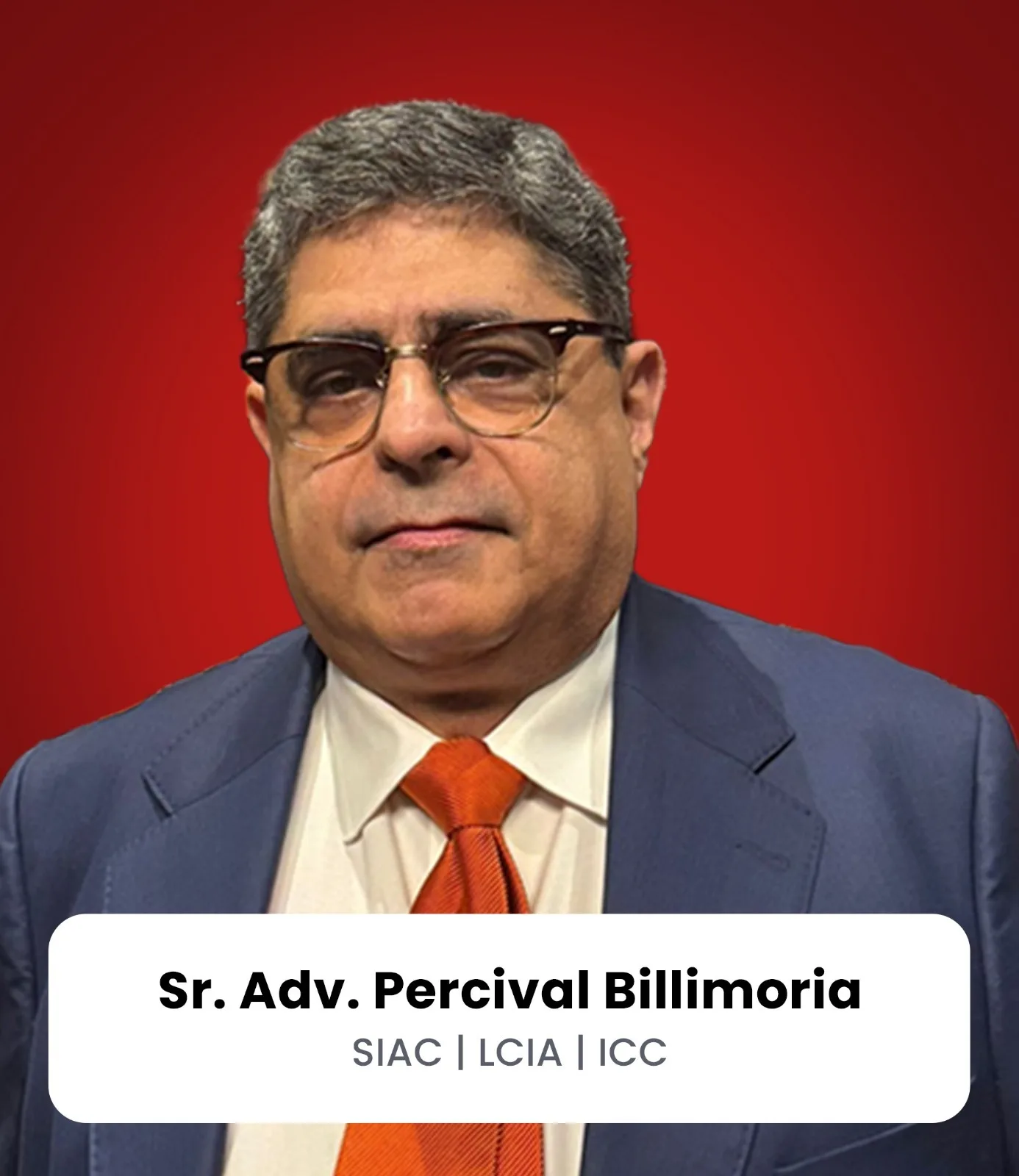
Sr Adv Percival Billimoria
Why This Course Matters
Commercial arbitration is no longer a niche area. It is central to resolving high-value disputes. Yet, most learners are exposed only to the theoretical framework, without clarity on how arbitration actually unfolds in practice.
This course is designed to bridge that gap.
It goes beyond statutory provisions to help you understand how disputes are structured, argued, and resolved; From drafting arbitration agreements to enforcing awards.
Whether you are a student, practitioner, or someone looking to enter dispute resolution, this course equips you with both conceptual clarity and practical insight into arbitration.
Course Overview
Comprehensive training on the four New Labour Codes with doctrinal clarity and practical insight.

Duration & Format
30 Sessions | 60 Hours 2 hours per session (1.5 hr class + 30 min discussion)
1 hr 10 min per session
50 min lecture + 20 min Q&A 16.5 total hours
Delivery Mode
Pre-Recorded ClassesWho Should Attend
Skills you’ll master
Get Clarity On
Your Instructor
Learn from an experienced Sr.Advocate with decades of experience
Sr.Adv.Percival Billimoria
Topic Overview
This course covers the complete lifecycle of arbitration from building your case to enforcement of awards.| # | Module | Topic |
|---|---|---|
| 1 | Building Your Case (10 Sessions) | i. Case Theory ii. Propositions of the Case Theory iii. Establishing Each Proposition iv. Anticipating the Case of Your Opponent v. Final Case Theory vi. Identifying Witnesses vii. Identifying the Need for an Expert Witness viii. Crafting the Plaint/Claim ix. Crafting the Evidence Affidavits x. Counter-Claims xi. Oral Advocacy xii. Cross-Examination – Do’s and Don’ts |
| 2 | Overview of Contracts & Damages (2 Sessions) | i. Time as the Essence ii. Reciprocal Performance iii. Governing Delay iv. Force Majeure v. Frustration of Contract vi. Termination vii. Breach of Contract viii. Damages for Breach ix. Meaning of "Loss" x. Liquidated Damages xi. Loss of Profit |
| 3 | Litigation & Arbitration Concepts (2 Sessions) | i. History and Evolution of ADR ii. Types of ADR Mechanisms iii. Scheme of the Act, 1996 iv. Objectives of Arbitration v. Settlements vi. Party Autonomy and Minimal Court Intervention vii. Difference Between Domestic and International Commercial Arbitration: a. Meaning of "Commercial" b. Meaning of "Habitually Resident Outside India" viii. "Court" and Jurisdiction ix. "Seat" vs "Venue" x. "Ad-hoc" vs "Institutional" Arbitration xi. Separability xii. Applicable Law |
| 4 | Agreement to Arbitrate (2 Sessions) | i. Ingredients of a Valid Arbitration Agreement ii. Stamping iii. Meaning of "Arising Out Of" iv. Multi-tier Arbitration Agreement v. Umbrella Agreement vi. Non-signatories Bound by an Arbitration Agreement vii. Pathological Arbitration Clauses |
| 5 | Reference to Arbitration & Tribunal (2 Sessions) | i. Reference of Dispute: a. Agreed Procedure for Appointment b. Notice c. Number of Arbitrators d. Fees ii. Arbitrability – Basics iii. Appointment by Court/Institution: a. Salient Differences b. Limited Scope of Enquiry iv. Reference by Judicial Authority v. New York Convention Disputes: a. "Null and Void" b. "Inoperable" or "Incapable of Being Performed" vi. Guidelines for Arbitrators – Independence & Availability |
| 6 | Jurisdiction of Arbitral Tribunal (1 Session) | i. Kompetenz-Kompetenz ii. Threshold Issue iii. Remedies |
| 7 | Interim Relief (1.5 Sessions) | i. Interim Relief: a. Scope b. Stage c. When Tribunal is in Place ii. Key Considerations iii. Emergency Arbitration |
| 8 | Process of Arbitration (2 Sessions) | (2 Sessions) i. Pleadings ii. Powers & Duties of Tribunal iii. Rules of Procedure iv. Evidential Proceedings v. Discovery & Witness Summoning vi. Expert Testimony vii. Contempt of Tribunal Orders |
| 9 | Arbitration Award (2.5 Sessions) | i. Time for Completion ii. Equity iii. Terms of Contract & Trade Usage iv. Reasoned Award v. Interest & Costs vi. Partial Award vii. Foreign Award viii. Rectification ix. Finality |
| 10 | Challenge to Domestic Award (3 Sessions) | i. Grounds for Challenge: a. Procedural – Natural Justice b. Substantive – Fundamental Policy, Patent Illegality ii. Limitation Period iii. Remand iv. Partial Setting Aside / Modification v. Appeal & Writs |
| 11 | Enforcement of Award (2 Sessions) | i. Domestic Awards: a. Scope b. Executing Court ii. Stay & Pre-deposit Principles iii. Foreign Awards: a. Scope b. Jurisdiction |
Career Opportunities
Exceptional performers get real opportunities
Research Assistantship
Top participants will get an opportunity to work directly with the chamber of Sr. Adv. Percival Billimoria in New Delhi.
- Work on arbitration research
- Contribute to a published treatise
- Recognition in publication
- Potential job offers
Internship Opportunities
Top 30 participants will receive internship opportunities based on performance and participation.
Selected based on:
- Course performance
- Active participation
- Assessment scores
Frequently Asked Questions (FAQ)
We understand you may have queries about our courses, enrolment process, or learning experience. Here are some of the most commonly asked questions to help you get started. If you need further assistance, feel free to reach out!
5. How is LiveLaw Academy different from other legal learning platforms?
14. How can I stay updated about new batches and webinars?
Ready to Build Real Expertise in Arbitration?
Gain practical clarity on commercial arbitration and learn how disputes are actually handled in practice.

structured learning

Senior Advocate

Recording Access

case-building approach
Includes 18% GST & gateway fees
Questions? Contact us at academy@livelaw.in or +91 7994869912